Why shared folders fall short for professional drone data delivery
What shared folders really offer
A shared folder, whether on Dropbox, Google Drive, or a network drive, is a simple way to pass files from one person to another. You upload a folder, share a link, and the recipient can download what is inside. For many casual exchanges this works fine. But for professional drone data delivery, where the outputs are large, varied, and need to be viewed by clients who may not have technical software, shared folders introduce a host of problems that can slow down a project and hurt your reputation.
When you deliver drone data through a shared folder, you are essentially handing over raw files with no structure for viewing or comparing them. The client must download everything, find the right files, and open them in their own software. That assumes they have the right software, the disk space, and the patience to navigate a folder full of filenames that may not mean much to them. The process is clunky, and it makes you look less professional than you really are.
How shared folders make drone data delivery harder
Drone projects typically produce a mix of image formats: orthomosaics, digital elevation models, point clouds, and sometimes raw photos. Each file type has its own viewer or editor. A shared folder gives no guidance on what to open first or how to view the data together. The client might open a .tif file and see nothing because their computer cannot render it, or they might open a .las point cloud and have no way to measure distances or add annotations. The result is a frustrated client who calls you for help, which defeats the purpose of a self-service delivery.
Another issue is file size. High-resolution orthomosaics can be hundreds of megabytes or even gigabytes. Downloading such files over a typical internet connection takes time, and if the shared folder link expires or the internet drops partway, the client may end up with a partial download and a corrupt file. They then have to start again, losing time and trust.
Shared folders also lack proper access control. When you share a link, anyone with that link can view the folder. You cannot easily revoke access for a specific person without breaking the link for everyone. You also cannot track who has viewed or downloaded which file. If a client loses a file and asks you to resend it, you have no record of whether they downloaded it the first time. This lack of visibility makes it hard to manage multiple clients and projects.
What professional drone data delivery should look like
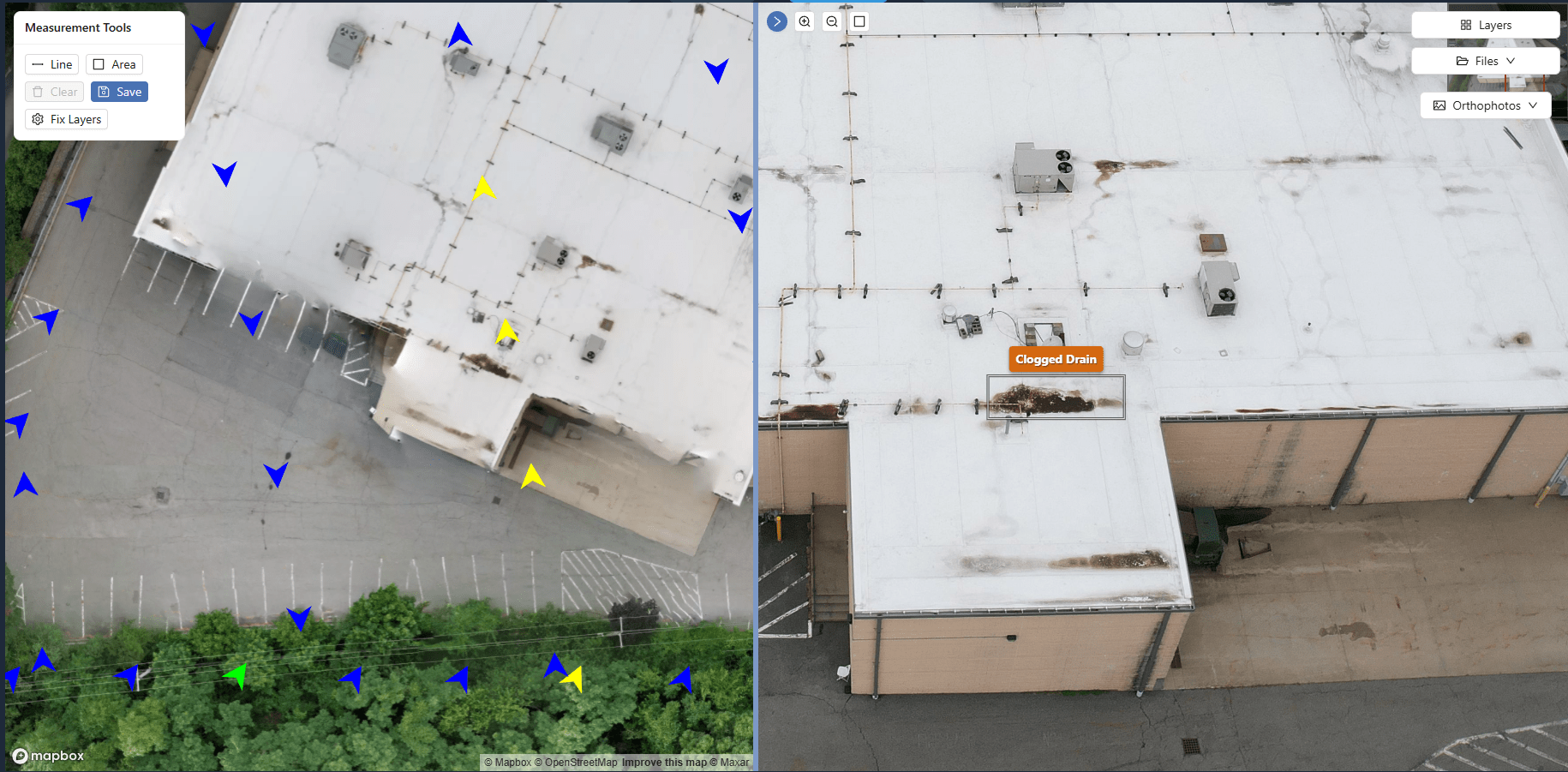
Professional drone data delivery should be built around a client portal: a dedicated web page where each client logs in to see only their own projects. Inside that portal, the files should be organized in job folders with clear names and dates. The client should be able to view orthomosaics and elevation models directly in a browser viewer, without downloading anything. They should be able to pan, zoom, and compare different layers or dates. They should be able to take measurements and add comments that you can see in real time.
A client portal also gives you fine-grained download permissions. You can let some clients download full-resolution files while others only view a watermarked preview. You can set expiry dates on access, revoke permissions instantly, and track every view and download. This level of control is essential when you are working with sensitive data, such as construction site progress or environmental surveys.
Companies like National Drone Services understand that delivering drone data is not just about transferring files. It is about presenting the information in a way that the client can use immediately, without friction. A client portal turns a delivery from a pile of files into a professional presentation that builds confidence in your work.
What to look for in a drone data delivery platform
If you are evaluating how to upgrade from shared folders, here are the key features to consider:
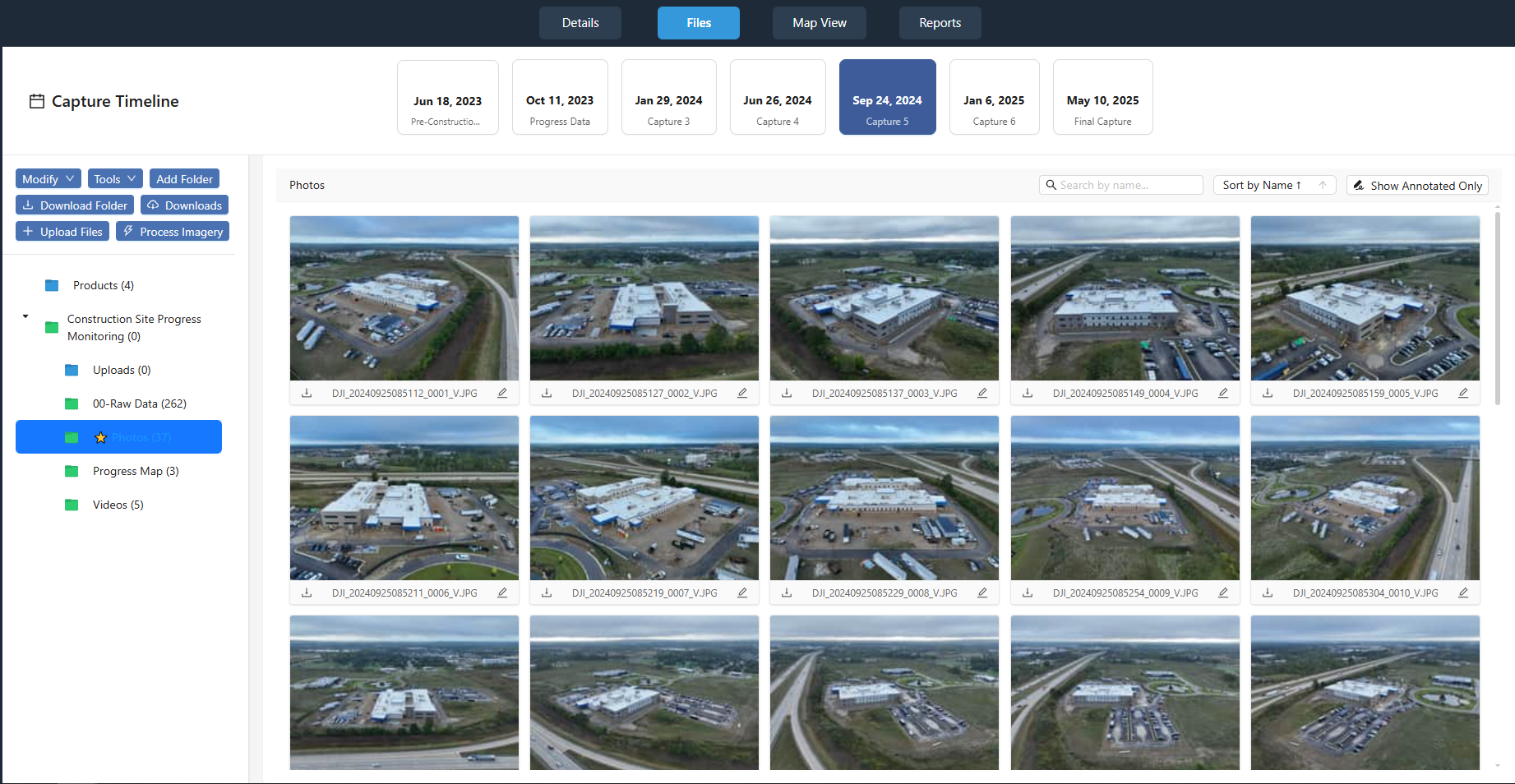
- Browser-based viewing of common drone outputs such as orthomosaics, point clouds, and elevation models, without plugins or downloads.
- Ability to compare two or more surveys side by side, or overlay them with adjustable transparency, to highlight changes over time.
- Role-based access and download permissions, so you can control who sees what and whether they can download the original files.
- Usage tracking that shows you who viewed which files and when, giving you a record for billing and support.
- Automatic file organization into project folders, with support for custom naming and metadata.
These capabilities turn drone data delivery into a repeatable, professional process. They save you time because you do not have to answer client questions about how to open files, and they save the client time because they can start working with the data immediately.
The trade-offs of moving to a platform
Moving from shared folders to a dedicated drone data delivery platform does require some investment. You have to learn a new tool, set up your projects inside it, and possibly pay a subscription fee. But the return on that investment is real. You eliminate the support calls about file formats. You reduce the risk of data leaks because you control access precisely. And you present a more polished image to every client.
One trade-off is that not every platform supports every file type or every workflow. Some platforms focus on orthomosaics and elevation models, while others also handle video or raw photos. You need to match the platform to the kind of work you do most often. Another trade-off is that the client portal becomes another system your clients have to log into. If they are used to clicking a Dropbox link, they may need a brief orientation. But most clients quickly appreciate the convenience of viewing data in their browser without downloading anything.
National Drone Services has found that the shift to a proper delivery platform improves client satisfaction and reduces the back-and-forth that plagues shared-folder workflows. The platform provides a single place where clients can find all their project data, see it in context, and give feedback. That makes the whole delivery chain smoother for everyone.
What this means for your business
If you are still using shared folders for drone data delivery, you are leaving value on the table. Your clients judge your professionalism partly by how easy you make it to use the data you provide. A shared folder says "here are the files, good luck." A client portal says "here is your project data, organized and ready to use." The difference in perception is huge.
As drone technology becomes more accessible, the bar for service quality rises. Clients who have worked with a few different drone service providers will start to expect the convenience of a browser viewer and access tracking. If you cannot offer that, you may lose bids to competitors who can. Investing in a proper delivery platform is not just a convenience; it is a competitive necessity.
In short, shared folders are fine for casual file sharing, but they are not enough for client-ready drone deliverables. A dedicated drone data delivery platform gives you control, tracking, and a better client experience. That is the standard your business should aim for.